
Visit Carleton! Book your tour today.
Program Details
Aerospace engineers designed the aircraft that take us to the edges of the Earth—and the satellites that orbit it. Today, they’re building greener planes, creating drones that deliver humanitarian aid and designing spacecraft that will take us farther into space.
Carleton became the first university in Canada to offer a Bachelor of Aerospace Engineering in 1988. With hundreds of undergraduates, it remains the largest and one of the most reputable programs of its kind in the country.
Streams
In their first year of study, aerospace engineering students study a common core of math, science and engineering. Then, they choose one of four streams of specialization:
- Stream A: Aerodynamics, Propulsion and Vehicle Performance specializes in aircraft aerodynamics, performance, control and propulsion technologies.
- Stream B: Aerospace Structures, Systems and Vehicle Design focuses on lightweight structures and materials for aircraft and spacecraft.
- Stream C: Aerospace Electronics and Systems concentrates on modern aircraft and spacecraft electronics for navigation, guidance, communication and remote sensing.
- Stream D: Space Systems Design emphasizes spacecraft design and mission planning, with courses dedicated to orbital mechanics, spacecraft design, communication, propulsion and dynamics.
Labs and Facilities
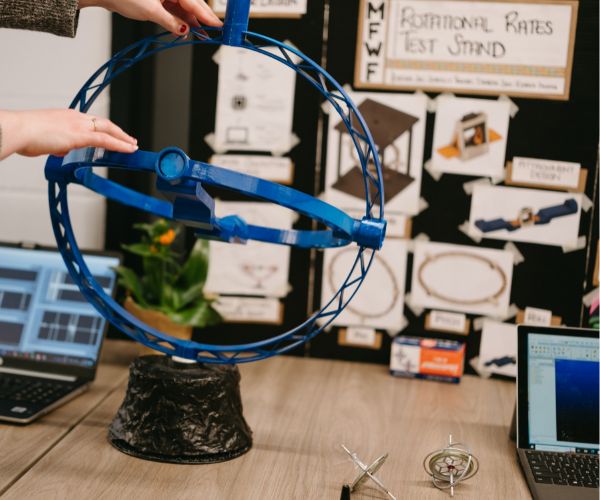
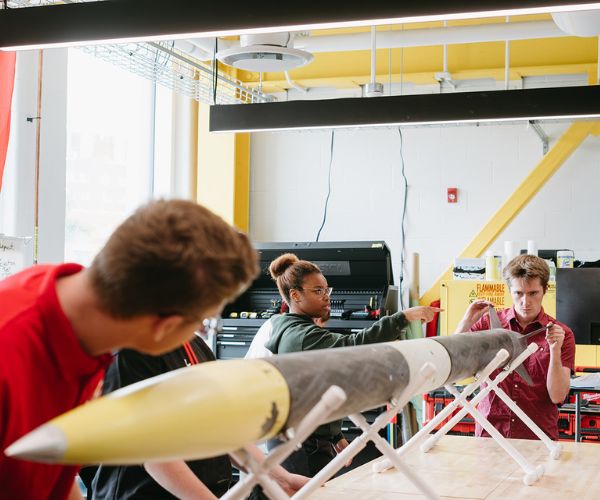
You’ll benefit from a diverse and in-depth curriculum, with specialized electives covering everything from orbital mechanics and transatmospheric propulsion to radar systems and spacecraft navigation. These courses are taught by professors with both research and industry experience and are supported by practical learning in Carleton’s design and manufacturing labs, aerodynamics and wind tunnel lab, propulsion lab, and space systems and dynamics lab.
Co-op
Carleton offers students a paid Co-op option with work terms of 4, 6, 8, 12 or 16 months.
Work Experience
Ottawa is home to one of Canada’s largest concentrations of government agencies and high-tech companies. Aerospace Engineering graduates work in every facet of our country’s thriving aerospace industry—from large original equipment manufacturers to innovative startups.

Get started in Carleton360 to receive tailored information on our programs, student services and community.
Career Outcomes
Explore your passions, refine new skills and discover the career that’s right for you.
As Canada's first accredited Aerospace Engineering program, Carleton has close connections to industry partners, giving students many career opportunities in various industries.
Sample Careers
- Aerodynamics
- Aerospace Industry
- Aircraft Communication
- Aircraft Control Systems
- Aircraft Navigation
- Aircraft Repair
- Aircraft Space Manufacturing
- Avionics
- Canadian Space Agency
- Defense
- Launch Vehicles
- Mission Control
- Piloted and Autonomous Aircraft
- Propulsion Systems
- Satellite Communications
- Satellite Systems and Operations
- Space Systems
- Spacecraft
- SpaceX
- Structures
- Transportation
Sample Courses
AERO 2001 - Aerospace Engineering Graphical Design
Engineering drawing techniques; fits and tolerances; working drawings; fasteners. Elementary descriptive geometry; true length, true view, and intersection of geometric entities; developments. Aerospace-specific CAD (Computer-Aided Design) assignments including production of detail and assembly drawings from actual aerospace physical models.
AERO 4003 - Aerospace Systems Design
Stress and deflection analysis; fatigue, safe life, damage tolerant design. Propulsion systems integration; landing gear; control and other subsystems. Mechanical component design. Airworthiness regulations and certification procedures. Weight and cost estimation and control. System reliability. Design studies of aircraft or spacecraft components.
Visit the Undergraduate Calendar to view a comprehensive list of course offerings for this program and discover the exciting things Carleton students are learning in the classroom!
Listen to the Talking Raven Podcast on Spotify to hear Dr. Edward Cyr talk about Dynamics, a first-year Engineering course!